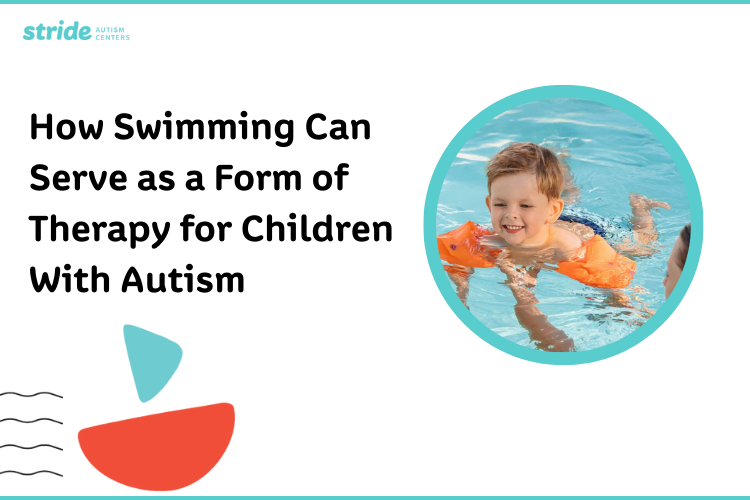
Supportive therapies help children thrive in all aspects of their development, including social, physical, emotional, and cognitive growth. Swimming is a powerful therapeutic tool that can help your kiddo learn and gain confidence while having fun.
Children with autism often benefit from swimming because it offers calm, sensory input and opportunities to practice various skills. Combining autism swimming classes with applied behavioral analysis (ABA) therapy can be a fantastic way to support learning and development.
Why the Water Is a Uniquely Supportive Environment
Water is a supportive environment for children with autism because it offers the following benefits:
- Buoyancy for a low-impact workout: Water supports your kiddo’s body weight, making it easier for them to move freely and build strength without straining their joints. This is especially beneficial if your child experiences motor planning challenges or low muscle tone.
- Natural hydrostatic pressure: Water places gentle, consistent pressure on the body, which can have a calming effect on the nervous system. They may find that it feels similar to a weighted blanket. Spending time in the water is an excellent way to support sensory regulation.
- A focused, distraction-free setting: The pool environment naturally limits auditory and visual distractions, helping your child focus on their instructor and the tasks at hand.
The Physical Benefits of Swimming for Autism
Learning to swim offers many physical benefits for children with autism:
Improved Motor Skills and Coordination
Swimming incorporates the entire body. This helps improve gross motor skills such as kicking and pulling. It also lets your kiddo practice using both sides of the body together in a controlled manner.
Enhanced Strength and Endurance
Water’s natural resistance can help your child build muscle strength and cardiovascular health. As they have fun moving their arms and legs through the water, they work multiple muscle groups. The water’s hydrostatic pressure boosts circulation and increases heart rate, strengthening your little one’s heart and lungs.

Better Body Awareness
Swimming provides continuous feedback to the joints and muscles, helping your little one learn where their body parts are in relation to their surroundings and how much force to use when moving. This develops a stronger sense of their physical self in space. Water’s buoyancy reduces the effects of gravity, allowing them to move easily with less fear of falling.
Your kiddo can explore new movements and gradually strengthen:
- Balance
- Coordination
- Motor planning skills
How Swimming Helps With Sensory Processing
Swimming can regulate or manage sensory processing in children with autism through the following benefits:
- A calming sensory experience: Water’s hydrostatic pressure provides deep, calming input that helps regulate the nervous system and reduce feelings of stress. This is especially helpful if your kiddo is sensory-seeking or sensory-avoidant.
- Management of sensory overload: Water provides consistent sensory input, which can help filter out more jarring sensations. A pool or body of water is a comfortable environment for children who often experience overwhelm.
- Tolerance of new textures and temperatures: Swimming is a gentle way to adapt to different sensations and temperatures.
Swimming Helps Children With Autism Build Social and Communication Skills
When it comes to autism and swimming lessons, the following aspects can build social and communication skills:
- Structured group learning: Swimming lessons provide a structured social setting. Your little one can practice following group instructions, waiting their turn, and interacting with peers in a supervised environment.
- Natural opportunities for communication: Swimming instructors often use a combination of verbal cues, prompts, and songs that encourage children to listen and respond. This can strengthen receptive and expressive language skills.
- Shared interests and peer interaction: Swimming provides a fun environment for children to connect with peers, build friendships, and develop a sense of belonging.
Practical Tips for a Successful Start
Use the following tips to introduce your little one to autism swimming lessons:
Choosing the Right Program
Choosing a supportive swimming program specifically designed for individuals with autism is essential for helping your little one thrive and build confidence. Ask if the program uses visual aids or schedules to help children adjust to the lessons. You can also ask about class sizes. Smaller groups may provide the most comfortable experience.
Introducing Your Child to the Pool
Start with short, fun visits without any pressure to swim. Let your kiddo explore the water at their own pace. They may want to sit on the steps, splash with their hands, or kick their feet. Bringing comfort items or fun sensory toys can create a sense of fun and familiarity, so they feel more comfortable in a new learning environment.
Addressing Water Safety
Learning water safety early in life can help your child avoid accidents, especially if they are drawn to water. Constant supervision is essential, but you can also help your little one learn safety with visual tools. For example, you might use picture cards or video modeling to teach rules such as only entering the pool with an adult.
Your family can also collaborate with the swim instructor to teach survival skills, like treading water, floating, and identifying exit points. Instructors with specialized training can tailor lessons and strategies to meet the needs of learners with autism.
How Swimming Complements ABA Therapy
ABA therapy helps little ones learn functional skills and build confidence. Swimming lessons complement ABA therapy in the following ways:
- Opportunities to practice skills: ABA therapy teaches foundational skills, and swimming provides a new environment to practice them. For example, your child might learn how to follow multistep directions during ABA therapy and then strengthen that skill when a swim instructor asks them to kick their feet and blow bubbles.
- Reinforced positivity: You can use swimming as a natural reinforcer within ABA therapy. The fun of the activity can motivate your kiddo to work on challenging tasks.
- Improved focus for therapy sessions: The physical exertion and sensory regulation of swimming can strengthen focus and encourage engagement in ABA therapy.
Swim Therapy Opportunities Near ABA Therapy Centers
Stride Autism Centers offers ABA therapy for children ages 2-6, and we are happy to collaborate with your little one’s swim therapist on goals and tracking progress. Explore the following swim therapy opportunities near Stride locations:
- Sunsational Swim School: Sunsational Swim School offers swim lessons for children with autism in Chicago, Illinois.
- SafeSplash Swim School: SafeSplash Swim School provides adaptive swim lessons in Waukee, Iowa.
- Swimtastic Swim School: Swimtastic Swim School offers swim lessons for all ages and abilities at its Omaha Northwest location and its Elkhorn, Nebraska location. Swimtastic also has a location in Lincoln, Nebraska.
Take the Next Step in Your Child’s Development